How D’Angelo Changed Neo-Soul: The Music, Musicianship and Lasting Influence
A short clip can do strange things to music memory. A few seconds of D’Angelo singing over a slow, honey-thick groove, and suddenly the comments fill with listeners rediscovering what made his records feel so different: the grain in the voice, the rhythm that seems to lean backward without ever falling over, the sense that every instrument has been allowed to breathe.
That response is not mere nostalgia for a stylish era of wide-leg pants and CD towers. D’Angelo helped redraw the map for modern R&B. His music made a persuasive case for something that the industry often treats as a nuisance: take your time, hire devastating musicians, leave space in the arrangement, and do not sand every human edge off the recording until it shines like a mall floor.
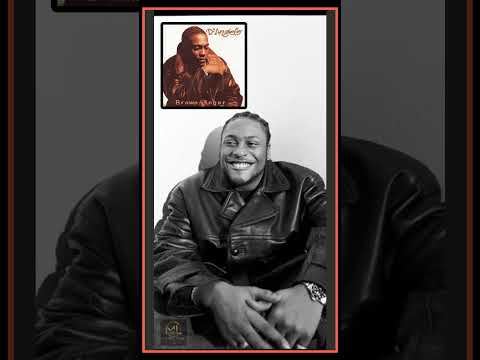
His catalog is remarkably compact, but its reach is anything but. Across Brown Sugar, Voodoo, and Black Messiah, D’Angelo turned neo-soul from a useful marketing label into a living, elastic musical language.
Neo-soul got a deeper pocket
When Brown Sugar arrived in 1995, R&B was already full of great singers, ambitious producers, and immaculate studio craft. D’Angelo’s distinction was not that he rejected polish; it was that he gave polish a pulse. The title track, “Lady,” and “Cruisin’” carry the melodic accessibility of classic soul, but their rhythms feel less rigidly programmed than much mainstream radio R&B of the period.
That mattered. The record helped establish a sound where hip-hop’s rhythmic attitude could meet the warmth of 1970s soul, jazz harmony, church-bred vocal instincts, and the physical authority of funk. “Neo-soul” was already circulating as a term, associated with artists including Erykah Badu, Maxwell, and Lauryn Hill. But D’Angelo supplied one of its clearest musical blueprints: reverence for the past without turning the past into a museum exhibit.
His grooves do not announce themselves with a giant neon arrow saying FEEL THIS. They seep in. A bass figure sits low, drums leave an uncanny amount of air around the beat, and a keyboard chord lands with the kind of delayed confidence normally associated with someone arriving late because they knew the party would wait.
Voodoo made looseness sound exact
Released in 2000, Voodoo remains the record most often cited when musicians talk about D’Angelo’s revolution. Its central trick is also its deepest discipline: it sounds relaxed enough to be accidental, while being far too carefully shaped for that to be true.
The album’s sessions brought together major players including drummer Ahmir “Questlove” Thompson, bassist Pino Palladino, and drummer James Gadson. Their contributions helped create rhythms that were dense but never crowded. The beat often appears to lag behind the listener’s expectation; then the bass, guitar, or vocal phrase shifts the whole picture. It is not sloppy time. It is time with an opinion.
That feel became a master class for artists and bands trying to escape the grid. A perfectly quantized rhythm can be useful—so can a hammer—but Voodoo reminded R&B that microscopic imperfections are often where the seduction lives. The album’s drums, bass, clavinet-like textures, guitars, and stacked vocals operate as a conversation rather than a hierarchy.
Listen to “Untitled (How Does It Feel)” and the arrangement’s patience is almost defiant. The song does not sprint toward its payoff. It lingers, builds, and trusts the singer’s phrasing to carry emotional weight. Elsewhere, “Devil’s Pie” and “Left & Right” show that the same musical world could be sharper, stranger, and more openly connected to hip-hop.
A singer who treated the voice like an instrument section
D’Angelo’s vocal style is often described as gospel-inflected, which is true but incomplete. Gospel is there in the melisma, the ache, the call-and-response instincts, and the way a single line can sound like it is arguing with itself. Yet he also uses his voice like a producer uses overdubs: as texture, percussion, harmony, smoke, and occasionally a knife.
His lead vocals rarely behave like a singer standing at the front of a band demanding a spotlight. They weave into the band. Consonants blur into the beat. Harmonies create their own weather system. That approach drew from the layered imagination of soul and funk records made by artists such as Stevie Wonder, Prince, Marvin Gaye, and Sly Stone, while refusing to become an oldies tribute act.
It also altered what listeners could expect from an R&B vocal. Technical showmanship has its place, but D’Angelo showed that restraint can be just as virtuosic. Sometimes the most powerful choice is not to belt a note into orbit. Sometimes it is to let the crack, breath, and silence do the talking.
Three albums, no assembly line
Part of D’Angelo’s mystique comes from his refusal to behave like a content factory. Brown Sugar arrived in 1995, Voodoo in 2000, and Black Messiah in 2014. The long spaces between releases have encouraged plenty of mythology, but the practical artistic result is clear: each album feels like a distinct statement, not a scheduled shipment.
Black Messiah, credited to D’Angelo and The Vanguard, expanded the palette again. The record is rugged, politically charged, and deliberately hard to reduce to a single clean genre tag. Rock guitar abrasion, funk, soul, psychedelic color, and communal vocals meet in songs that can feel both ancient and urgently contemporary.
That album reinforced a crucial point about his legacy: D’Angelo’s version of neo-soul was never simply “smooth.” It could be sensual, yes, but it could also be confrontational, knotty, and noisy. The groove was not a decorative throwback. It was a vehicle for tension.
The afterlife of a band-first idea
Today’s soul and funk landscape is broad enough to include bedroom producers, festival-sized bands, jazz-school harmony heads, and artists who treat a cracked iPhone vocal as a legitimate aesthetic choice. D’Angelo’s influence belongs less to one imitation than to a set of permissions.
You can hear related values in the live interplay favored by artists such as Robert Glasper, in the bass-and-drums intelligence that powers much of Anderson .Paak’s work, and in the adventurous modern soul, funk, and jazz-fusion communities surrounding groups like The Internet and Hiatus Kaiyote. These artists have their own identities and histories; drawing a straight line from any one of them back to D’Angelo would be lazy music writing. But the larger climate he helped create is unmistakable.
- Groove can be intricate without becoming sterile.
- Live players can be central to contemporary R&B, not an expensive afterthought.
- Vintage influences work best when they are transformed, not merely copied.
- An album can demand attention rather than endlessly audition for it.
That last lesson may be his most radical. D’Angelo’s records do not beg to be understood on the first pass. They reward return visits, better speakers, late-night listening, and the occasional moment of realizing that the drum part you thought you knew has been quietly rearranging your nervous system for five minutes.
For a musician, that is influence. For a listener, it is a fine reason to press play again.