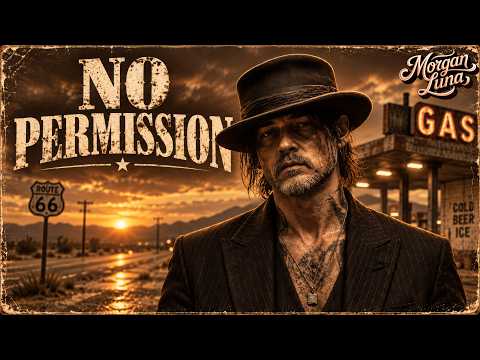
Morgan Luna and the New YouTube Audience for Independent Blues
Blues has always had a complicated relationship with permission. The music was built by people who routinely had none: no polite invitation into the room, no guaranteed payday, no committee waiting to approve the guitar tone. So Morgan Luna’s “No Permission” arrives with a title that understands the assignment.
The video’s central message is blunt, repetitive and intentionally unvarnished: don’t shrink the sound, don’t sand down the edges, and don’t hand someone else the keys to your work. It is a useful little flare in the night for independent blues artists, particularly on YouTube, where the old gatekeepers are less powerful but the new ones can be just as unforgiving. The bouncer may be gone. In his place is an algorithm wearing headphones.
Morgan Luna’s release is not proof that the internet has suddenly solved the blues business. Nothing that convenient has happened. But it does spotlight a genuine shift in how a newer artist can put blues-rooted material in front of listeners who may never catch a late set at a neighborhood club, scan a festival poster, or hear a specialist radio show.
“No Permission” makes its case without asking politely
The lyric in the supplied performance works as an independence manifesto. Its narrator pushes back against rules, measurements, “good taste,” and the familiar industry instinct to make something more manageable. The recurring idea is ownership: the artist may be judged, but the songs remain theirs.
That sentiment is especially apt for a genre that is often boxed into museum language. Blues can be treated as either sacred heritage or a guitar-store demonstration with a cover charge. Both approaches miss the point. A living blues artist needs room to be raw, loud, contemporary, awkward, funny, furious, or all five before dinner.
“No Permission” does not spend its time arguing for academic credibility. It plants its feet. The lyric’s repeated refusal to seek approval gives the song an identity that is easy to grasp even for a casual viewer arriving cold through a recommendation, a shared link, or a late-night scroll that began with one riff and ended three hours later in a swampy corner of the internet.
That clarity matters online. A viewer cannot be expected to arrive with a working knowledge of postwar Chicago, Texas shuffle, or Memphis recording lore. They need a feeling, a hook, and a reason to stay. Luna’s stated attitude supplies all three.
YouTube can be a front door, not merely a filing cabinet
For decades, an emerging blues act generally built an audience through a familiar grind: local rooms, opening slots, regional festivals, word of mouth, physical records, and the occasional champion at radio. Those routes still matter enormously. Live music remains where a musician learns whether a song can survive bad monitors, a distracted crowd, and somebody ordering nachos directly beneath the quietest verse.
But YouTube changes the geography. A performance or visualizer can reach a listener in Los Angeles, Chicago, Austin, London, or a town without a dependable blues venue. The audience does not need to know the artist’s name in advance. It can arrive through searches for blues music, Memphis-flavored sounds, guitar clips, songwriting channels, or adjacent artists.
For independent musicians, that discovery path has practical advantages:
- A song is available beyond one night: a club set disappears when the room empties; a video remains findable.
- Context travels with the music: a title, thumbnail, description, and linked catalog can introduce an artist to newcomers.
- Listeners can respond directly: comments, shares, subscriptions, and repeat viewing create feedback that traditional distribution rarely offers at the same speed.
- Niche does not have to mean tiny: blues audiences are spread across regions and generations, which is precisely where an international platform can help.
None of this guarantees momentum. YouTube is crowded with astonishing players, competent players, and a frankly heroic number of people bending the same pentatonic note into the next fiscal quarter. Visibility requires consistency, recognizable presentation, and music that gives people a reason to return.
The independent advantage is voice, not volume
The temptation for an artist chasing digital reach is to imitate whatever appears to be winning: shorter clips, louder masters, bigger gestures, cleaner branding. Sometimes that works. Sometimes it turns a distinctive musician into another thumbnail screaming for help.
Luna’s lyric argues for the opposite instinct. Its speaker refuses to have the corners filed down and refuses the demand to “make it small.” As an artistic position, that is more useful than the usual vague advice to “be authentic.” It says a song needs a point of view sturdy enough to survive the platform around it.
That does not mean rejecting craft. Quite the opposite. Independent artists need to be unusually deliberate about sound, video quality, release cadence, metadata, and how each upload connects to the next. But a coherent voice is the part no distribution tool can manufacture. A direct title such as “No Permission”, paired with a song about creative self-possession, gives audiences something legible to recognize.
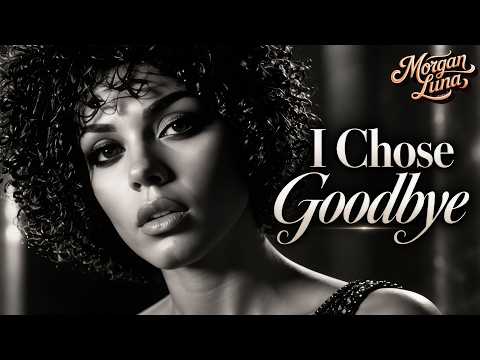
The available video material establishes that Morgan Luna is presenting original, blues-oriented work under the ML MUSIC banner. It does not, on its own, provide a verified biography, detailed recording personnel, or songwriting and production credits. That distinction is worth keeping. Independent music coverage has a bad habit of turning an attractive narrative into a stack of unverified liner notes. Better to let the song speak where the documentation stops.
What a YouTube strategy can learn from this song
The lesson is not that every independent blues release needs a defiant slogan. Subtlety has paid plenty of rent in this genre. The lesson is that a video should communicate a reason for existing quickly and honestly.
For artists working outside the major-label machine, a sustainable approach can be remarkably unglamorous: release complete songs, make the artist and title easy to identify, link related performances, use short clips as invitations rather than substitutes, and give viewers a clear next step. Subscribe, watch another performance, visit a site, join a mailing list, buy music, see a show when one is actually announced.
Most importantly, use YouTube to extend the live-music relationship rather than replace it. Blues is still social music. It belongs in small rooms, on festival stages, in bars with questionable carpeting, and in theaters where somebody in row G closes their eyes at exactly the right moment. Video can widen the circle. It cannot recreate the air moving from an amplifier into a crowded room.
A larger room for artists who refuse to shrink
“No Permission” lands because its premise is older than any platform: a musician has to protect the thing that makes the music theirs. YouTube offers independent blues artists a larger room in which to do that, with fewer traditional barriers between a release and a potential listener.
The trade-off is ruthless abundance. Being uploaded is not the same as being heard, and being heard once is not the same as building a following. Still, artists such as Morgan Luna can use a direct song, a durable video presence, and a clear artistic identity to meet listeners where they already are.
That may not be permission. It is something more useful: an open door.